
When Does a Mixer Spiral Affect Dough Texture Too Much?
When Does a Mixer Spiral Affect Dough Texture Too Much?
A mixer spiral can improve dough development, but when speed, shape, or mixing time are not matched to the recipe, it may tighten gluten too much and change the final crumb. For researchers and buyers in baking production, understanding this balance is essential for choosing equipment that protects dough texture, supports consistent output, and improves processing efficiency.
In bakery processing, dough texture is not shaped by flour and water alone. Mixing energy, bowl capacity, dough temperature rise, batch size, and downstream handling all influence the final product. For industrial users evaluating baking machinery, the question is practical: at what point does a spiral mixer stop helping dough and start damaging structure, extensibility, and fermentation performance?
This issue matters even more in integrated food production lines, where dough may move from mixing to resting, dividing, proofing, baking, cooling, and in some applications drying or dehydration-related post-processing. A poor mixing decision can reduce product uniformity, increase scrap rates, and create instability across 2 to 3 later process stages.
For procurement teams and technical researchers, the goal is not simply to buy a stronger mixer. It is to select equipment and line support systems that match dough type, hydration level, batch rhythm, and plant layout. Companies such as Zhengzhou Topleap Food Machinery Co., Ltd., founded in 2000 and focused on the design, production, and sales of baking equipment, are increasingly evaluated on this full-process understanding rather than on single-machine output alone.
How Spiral Mixing Changes Dough Structure
A spiral mixer is designed to develop gluten efficiently by combining rotation of the spiral tool with bowl movement. In many bakery applications, this gives faster dough formation than manual or low-energy mixing. For medium and large batches, it can improve consistency from batch 1 to batch 20 within the same shift, which is one reason spiral systems remain common in bread, bun, and pizza production.
However, dough development has an upper limit. Once gluten is fully organized, additional mechanical work starts to tighten the network rather than improve it. This can make the dough less extensible, harder to sheet, and more likely to shrink back after forming. In lean dough, the effect often appears as reduced volume. In enriched dough, it may appear as a dense or uneven crumb after baking.
The spiral itself is not the only factor. Three variables usually interact: spiral geometry, mixing speed, and total mixing time. A spiral that is too aggressive for a soft dough can raise friction and dough temperature by 2°C to 6°C more than expected. That temperature increase may shorten fermentation tolerance and reduce process stability in facilities running multiple batches per hour.
Key indicators that the spiral is affecting texture too much
Operators and technical teams should watch for specific physical signs instead of relying on mixing time alone. Over-tightened dough often feels smooth but resistant, shows poor stretch during windowpane testing, and becomes difficult to scale evenly. In production, this may lead to higher rework rates, uneven proofing, or 5% to 12% variation in product shape across a single run.
- Excessive dough temperature rise compared with the recipe target, often above the planned final dough temperature by 2°C or more.
- Reduced extensibility during sheeting or moulding, especially in doughs above 65% hydration or with long fermentation schedules.
- Faster oxidation and paler crumb in formulas where color and flavor retention are important.
- Noticeable tightening after the first speed stage, even before the expected development point is reached.
For plants handling both baked and dried bakery products, texture control is especially important. Dough that is too tight may bake unevenly and produce inconsistent moisture migration later, affecting shelf life and drying uniformity in related downstream processes.
When Does “Too Much” Mixing Usually Happen?
There is no single minute mark that defines overmixing for every product. The turning point depends on flour strength, hydration, sugar and fat content, dough mass, and desired crumb style. Still, production teams can use practical thresholds. For standard bread dough, the risk typically increases once full development is reached and mixing continues for another 10% to 25% of total effective time at the same energy level.
High-speed mixing increases this risk. A spiral mixer that works well for a 180 kg dough batch may become too aggressive when the same recipe is run at only 40% to 50% of bowl capacity. Smaller masses are less able to absorb mechanical energy evenly, so dough may tighten faster and heat up earlier. That is why minimum and maximum batch ranges matter as much as nominal bowl volume.
Formulas with delayed salt addition, preferments, or autolyse may also react differently. If the process has already improved gluten alignment before final mixing, the spiral may need less work than expected. Buyers comparing machines should therefore request test data or trial runs using their own flour and process conditions instead of accepting generic cycle times.
Typical risk scenarios by dough type
The table below shows where spiral action tends to become excessive in common bakery applications. These are practical ranges, not fixed rules, and should be validated with plant trials.
The main conclusion is that “too much” is usually a mismatch between machine energy and dough requirement. A mixer that is ideal for one product family can be excessive for another, even in the same factory.
Why this matters for industrial buyers
Procurement decisions should not focus only on motor power or maximum throughput. They should consider recipe diversity, actual fill ratio, dough temperature control, and line repeatability over 8 to 12 hour operating windows. This is especially relevant for exporters and multi-market bakeries producing different styles for Europe, North America, or Southeast Asia.
What Equipment Features Help Protect Dough Texture
To avoid excessive spiral impact, buyers should look beyond the mixing tool itself. Bowl geometry, speed staging, lifting systems, and transfer design all influence how gently or aggressively dough is handled after development. In industrial bakeries, mechanical stress often continues after mixing, particularly when dough is discharged into mobile bowls, elevators, or hoppers.
This is where line integration becomes important. A well-controlled lifting and transfer step can reduce deformation and preserve the dough condition achieved in the mixer. In food processing environments using 180L drums or larger, a dedicated lifting solution can support more stable discharge height and smoother downstream feeding.
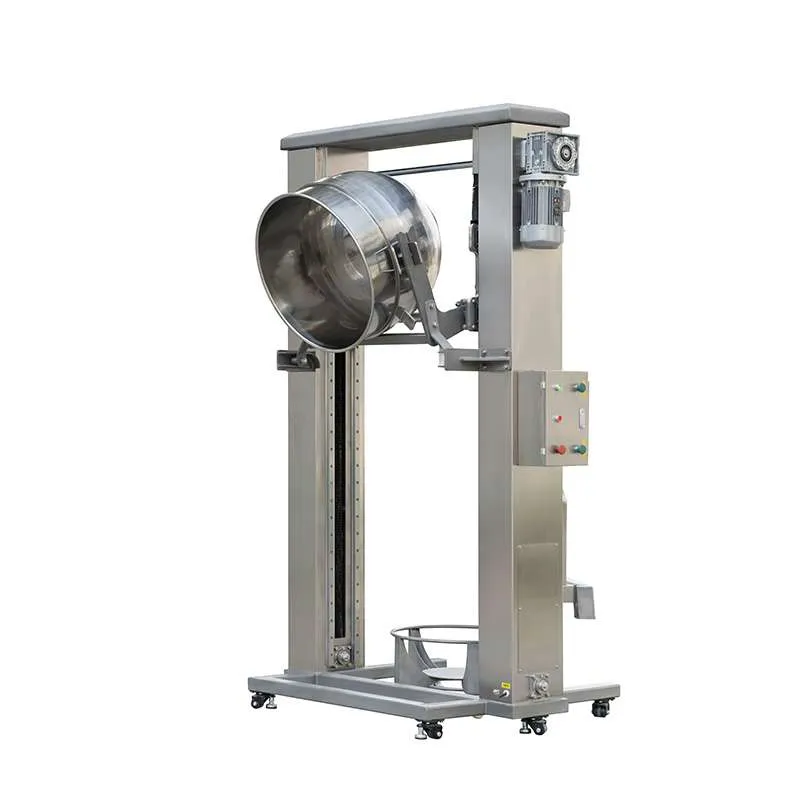
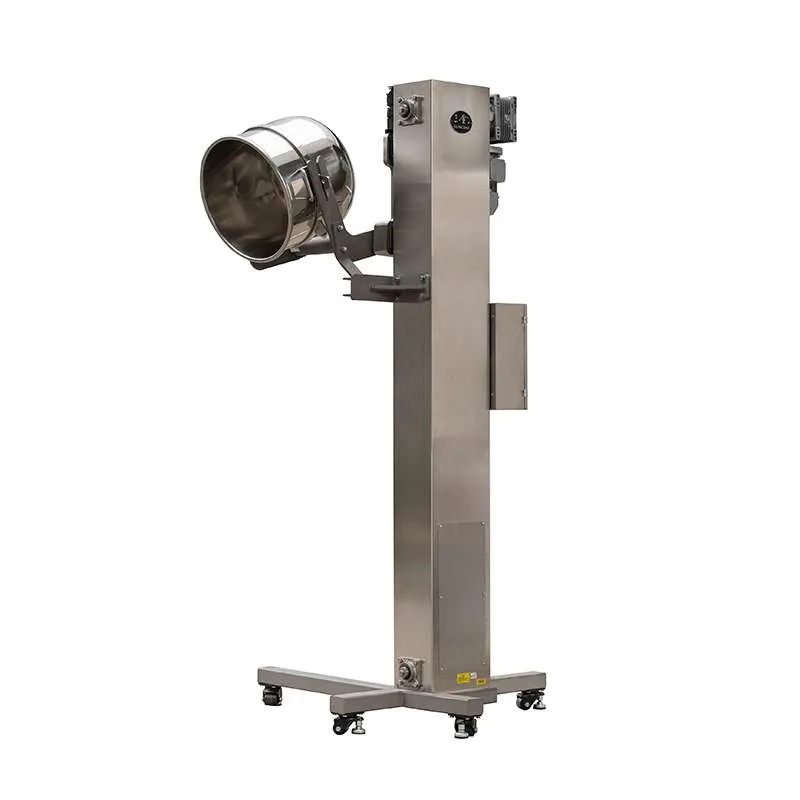
One example is the Double Columns Lifting Machine, designed for food processing applications. It supports the lifting of 180L or more mixing drums, offers precise adjustment of lifting height, and allows smooth fine-tuning during lifting and lowering. For bakeries that want to limit rough handling between the mixer and the next process, this type of support equipment can be a practical part of texture protection.
Why transfer stability matters after mixing
Even if the mixer cycle is correct, poor discharge control can stretch, compress, or degas dough unnecessarily. If the unloading height is not matched to the receiving unit, operators may compensate manually, causing inconsistency from batch to batch. This is a common but overlooked source of texture variation in factories scaling output.
The following equipment data shows how support machinery can contribute to safer dough handling and more predictable line design.
For buyers, the value lies in accuracy and repeatability. Smooth running, simple operation, and height adjustment according to customer site design can reduce manual intervention and protect dough quality after the mixing stage, especially in continuous or semi-automated bakery lines.
How to Evaluate a Mixer for Recipe Fit and Plant Efficiency
A good mixer purchase starts with recipe mapping. Technical teams should classify products by hydration, target dough temperature, desired extensibility, and daily batch count. A plant making 3 dough families with 2 fermentation methods has different needs from a single-product bread line. Without this mapping, buyers often overspecify power and underspecify controllability.
Zhengzhou Topleap Food Machinery Co., Ltd. has operated in baking equipment since 2000 and serves both domestic and export markets through the Sanking and TOPLEAP brands. For buyers, this background matters because equipment suppliers with broad market exposure are typically more familiar with varied process requirements across cake shops, food factories, and regional baking styles.
A practical 5-point selection method
- Confirm the real batch range, not only the maximum bowl capacity. A machine used below 50% fill may handle dough very differently.
- Define acceptable dough temperature rise per cycle. In many operations, keeping the rise within about 3°C to 5°C improves consistency.
- Check whether the mixer allows staged control for incorporation, development, and finishing instead of only simple high/low operation.
- Review discharge and transfer design, including drum movement, lifting, and hopper alignment.
- Ask for trial validation using the actual flour blend and at least 2 or 3 representative recipes.
These points help connect texture control with broader plant efficiency. A mixer that saves 2 minutes per batch but creates more rework later may not be the better investment. Conversely, a machine with slightly longer cycle time may produce more stable dough and reduce losses over a full production week.
Comparison factors for procurement teams
The table below can be used as an internal screening tool when comparing multiple suppliers or models.
When procurement, engineering, and production teams use the same comparison logic, equipment selection becomes more objective and less dependent on brochure claims alone.
Common Mistakes, Maintenance Priorities, and Buyer FAQs
Many texture problems blamed on the mixer spiral are actually process-control issues. A weak flour lot, warm water, inconsistent loading sequence, or delayed transfer can create symptoms similar to overmixing. That is why troubleshooting should cover the full line, from ingredient input to discharge and resting conditions.
Maintenance also matters. Worn parts, unstable rotation, or poor calibration of lifting equipment can introduce variability that operators try to compensate for by changing mix time. Over several weeks, this creates drift in the process. Preventive checks every 1 to 3 months are common in industrial settings, with more frequent inspection in high-load production.
Frequent mistakes to avoid
- Using one standard mixing program for all formulas, even though doughs with 58% hydration and 72% hydration respond very differently.
- Ignoring small-batch behavior in a large-capacity mixer, which often increases energy concentration and temperature rise.
- Focusing only on mixing time while not measuring final dough temperature or post-mix handling conditions.
- Installing transfer equipment without confirming unloading height, ceiling clearance, and drum compatibility.
How can buyers tell whether a mixer is too aggressive for their products?
Run at least 2 comparative trials using the same formula: one at the current process target and one with slightly reduced second-stage time. If dough extensibility improves while volume remains stable, the original process may be overdeveloping the dough. Track temperature, proof tolerance, and shaping response rather than relying only on appearance in the bowl.
Is stronger motor power always better for industrial dough mixing?
No. Higher power can support larger or more demanding batches, but without proper control it may increase friction and tighten dough too quickly. For many buyers, controllability, fill-range suitability, and stable discharge design are more valuable than simply choosing the highest power rating.
What should be checked before installing lifting and transfer equipment?
At minimum, confirm 4 items: drum size, required unloading height, plant ceiling clearance, and electrical compatibility. For example, a lifting system with 2700 overall height and 1597 unloading height should be reviewed against the actual receiving equipment and workshop structure before purchase.
In bakery and food processing lines, dough quality depends on cumulative control. The spiral mixer is central, but it should be selected together with handling, lifting, and transfer equipment that preserve the intended texture from the mixer to the next stage.
For researchers and procurement professionals, the best investment is equipment matched to product behavior, operating rhythm, and site conditions. Zhengzhou Topleap Food Machinery Co., Ltd. brings long-term experience in baking equipment design, production, and sales for domestic and international markets, helping customers evaluate machinery with both process performance and practical plant use in mind.
If you are comparing mixer configurations, transfer systems, or support equipment for bakery production, now is a good time to review your dough handling chain in detail. Contact us to discuss your process requirements, request a tailored solution, or learn more about equipment options that improve dough consistency and production efficiency.
News List
- Spiral dough mixer capacity gaps that affect daily outputMay 09, 2026
- Is a 10kg dough spiral mixer too small for commercial use?May 09, 2026
- Mixer dough spiral issues that often lead to uneven kneadingMay 09, 2026
- What makes a planetary mixer easier to clean after wet mixes?May 09, 2026
- Why 20 liter planetary mixers are popular in test kitchensMay 09, 2026
- Spiral dough mixer energy use vs output: what really mattersMay 09, 2026
Best-Selling Products
 Industrial Commercial mixer cake Dough Mixer planetary mixer for sale
 Hot Selling SKM-60L 80L 100L Stainless Steel Planetary Mixer
 Bakery Equipment 125kg 150kg Kneader Spiral Dough Mixer
 Double Columns Lifting Machine
 7L 600W Electric Mixer Stand Mixer Bread Mixer
 Piston Pump For Planetary Mixer
 Mobile Planetary Mixer With Mobile Platform And Customizable Height
 2024 Kitchen Mixer With One Ball Commercial Appliances Planetary Mixer
Leave Us a Message
Send us a Message
A dedicated person will follow up on your needs one-on-one and provide personalized customized solutions according
to your needs.
Get In Touch
We look forward to hearing from you for in-depth communication on how to fulfill your mixing requirements.
Please give us a message