
Spiral dough mixer capacity gaps that affect daily output
Spiral dough mixer capacity gaps that affect daily output
Daily output problems often start with overlooked capacity gaps in a spiral dough mixer. For engineering planning, the nominal batch size printed on a machine is only one part of the real picture. Actual flour load, dough hydration, motor reserve, mixing time, downstream proofing rhythm, and sanitation intervals all influence how much dough can be produced in one shift. When these factors are mismatched, the result is not only lower throughput but also uneven dough development, unstable product quality, and unnecessary strain on bakery process equipment. This article answers the most common questions about spiral dough mixer capacity and explains how to connect mixer sizing with reliable production performance.
What does capacity really mean in a spiral dough mixer?
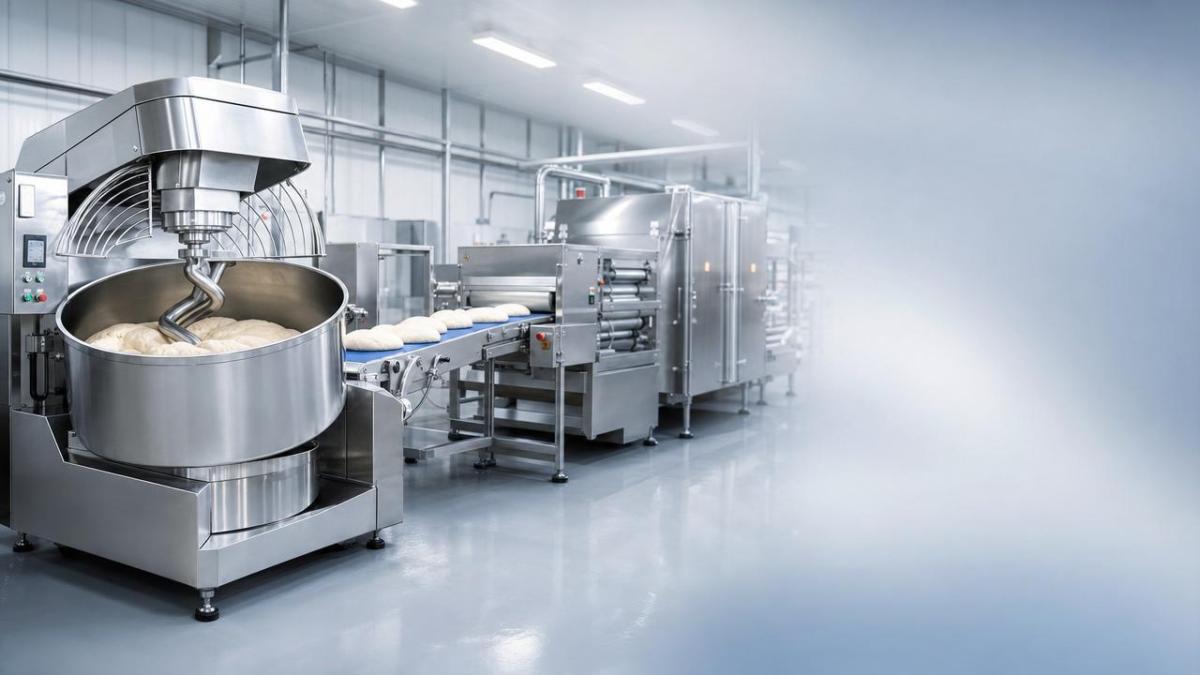
In many equipment listings, spiral dough mixer capacity is described by dough weight, flour weight, or bowl volume. These three values are related, but they are not interchangeable. A 50 kg dough batch does not mean 50 kg of flour, and a larger bowl does not guarantee that every dough type can be mixed at the same load. Capacity should be understood as the stable working range where the mixer can develop dough consistently without overheating, overloading, or losing mixing efficiency.
For bakery operations connected with food processing and drying workflows, stable dough output matters because any variation at the mixing stage affects later process balance. If dough pieces enter fermentation, baking, cooling, slicing, or drying at different conditions, the full line becomes harder to control. That is why the practical capacity of a spiral dough mixer is more useful than the maximum theoretical number.
A good starting point is to check four values together: flour load, finished dough load, bowl volume, and motor power. Then compare them with your actual recipe. High-hydration dough behaves differently from stiff dough, sweet dough, or dough with inclusions. The same spiral dough mixer may handle one recipe smoothly at full load but require a reduced batch size for another recipe to maintain dough temperature and gluten development.
Why do small capacity gaps create big daily output losses?
A capacity gap of only 10% to 20% may look minor on paper, yet it can create a serious output bottleneck over a full shift. This happens because production is cumulative. If each batch is slightly smaller than required, the line needs more cycles to meet the same target. More cycles mean more loading, unloading, waiting, cleaning, and operator intervention. The hidden loss is often larger than the nominal difference between mixer sizes.
For example, if a line needs 800 kg of dough per shift and the selected spiral dough mixer can only deliver 60 kg usable dough per cycle instead of the planned 75 kg, the number of batches rises sharply. That adds mixing time and extends idle time for sheeting, dividing, or drying-related stages waiting for the next dough release. Once the line starts waiting on dough, the entire process rhythm is affected.
Another problem is partial loading. Many users assume underloading is always safe, but a spiral dough mixer often performs best within a defined batch range. If the bowl is too lightly loaded, the hook may not develop the dough efficiently, causing longer mixing time and inconsistent structure. So both overload and underload can reduce daily output in different ways.
- More batches per shift increase labor touches and downtime.
- Longer mixing time reduces effective machine utilization.
- Inconsistent dough development disrupts later process stability.
- Motor overload risk can trigger unplanned stops or protection alarms.
How should batch size be matched with recipe type and production rhythm?
The right spiral dough mixer size depends less on headline capacity and more on recipe behavior and shift organization. Lean dough, high-water dough, enriched dough, and dense dough all place different demands on the machine. Stiffer dough usually needs higher torque and may require a lower practical loading ratio. Dough with sugar, fat, seeds, or fillings may also change the mixing curve and increase total cycle time.
Production rhythm matters just as much. If downstream equipment works in continuous flow, the mixer must release dough at predictable intervals. In contrast, a semi-batch process may accept wider timing variation. A common sizing mistake is choosing a spiral dough mixer only from target kilograms per hour, without checking cycle time per batch. Total cycle time includes ingredient loading, low-speed mixing, high-speed development, discharge, and preparation for the next batch.
To estimate a suitable batch plan, calculate the required dough per hour, then divide by usable batch output rather than advertised maximum output. Add a safety factor for recipe changeovers and sanitation. This is especially important in plants where mixed dough supports products later entering controlled drying, packaging, or shelf-life stabilization steps. Any irregular supply from mixing can push downstream equipment into inefficient stop-start operation.
A practical sizing check
Which signs show that a spiral dough mixer is undersized or oversized?
An undersized spiral dough mixer usually shows stress before it shows failure. Typical signs include extended mixing time, rising dough temperature, unstable gluten development, frequent overload protection, and production teams splitting one planned batch into two smaller ones. Even if output targets are still being met, this often indicates hidden inefficiency and inconsistent product quality.
An oversized machine creates a different set of issues. It may occupy more floor space than necessary, increase initial investment, and perform poorly with small recipes if the load sits below the effective working range. In operations with multiple SKUs and frequent batch changes, oversized equipment can reduce flexibility rather than improve it.
The best choice is not the biggest spiral dough mixer available but the model that fits your common batch range while leaving enough reserve for peak demand. This balance protects product quality and supports efficient use of power, labor, and floor layout.
Quick warning indicators
- Dough temperature rises too fast at target load.
- The mixer reaches target development only with extended high-speed time.
- Operators regularly reduce batch size to avoid strain.
- Small experimental batches cannot be mixed consistently.
What technical features matter when comparing capacity across models?
Capacity comparison should go beyond kilograms alone. Drive design, hook and bowl speed, control options, protection systems, and machine stability all influence real output. A spiral dough mixer with better torque delivery and controlled speed transitions may outperform a nominally larger machine in practical bakery use.
Two-speed mixing is valuable because it allows gentle incorporation followed by stronger development. Timing functions improve batch repeatability. Overload and phase-loss protection help maintain equipment safety, especially where utility conditions fluctuate. Manual and microcomputer control options can also support different operation habits and process standardization levels.
In production systems connected to drying or post-bake processing, repeatability is often more important than occasional peak output. A stable spiral dough mixer helps maintain consistent dough structure, which supports more predictable moisture behavior, product form, and downstream processing performance.
How can capacity planning reduce output risk and improve long-term efficiency?
Effective capacity planning starts with a simple rule: size for normal production, verify for difficult recipes, and allow reserve for growth. Review your top products by batch frequency, not just by total annual volume. Then check the hardest dough condition likely to run on the same spiral dough mixer. This reveals whether your chosen model has enough torque, bowl volume, and operational flexibility.
It is also useful to map the mixer against shift structure. Ask how many batches are required per hour, how much downtime is acceptable, and whether one mixer stop would halt the full line. Where output continuity is critical, one properly sized mixer with reliable controls may be more valuable than a nominally larger but less stable option. In some cases, two smaller units may improve scheduling flexibility, maintenance planning, and recipe separation.
The table below summarizes common questions when evaluating spiral dough mixer capacity gaps.
Zhengzhou Topleap Food Machinery Co., Ltd., founded in 2000 in Xinmi Quliang Industrial Park, focuses on the design, production, and sales of baking equipment. With the domestic “Sanking” brand and the export-oriented “TOPLEAP” brand, the company serves markets across China, Europe, the United States, Southeast Asia, and other regions through growing distribution and agent networks. Its experience in bakery equipment manufacturing supports practical solutions where efficiency, quality consistency, and service responsiveness are essential.
If your current line is limited by batch timing, dough consistency, or uncertain mixer sizing, review the full load range instead of relying on a single capacity figure. A well-matched spiral dough mixer improves daily output, reduces process interruptions, and creates a more stable foundation for downstream production. For reference, Topleap offers models in 10kg, 15kg, 25kg, 50kg, and 75kg ranges with features such as imported belt drive, timing function, switchable microcomputer/manual operating systems, fast speed, high water absorption, and overload plus phase-loss protection. Learn more about Spiral Mixer Dough Mixer 10kg 15kg 25kg 50kg 75kg to compare specifications such as SKM-10S, 220/380 voltage, 30L bowl volume, manual control, and other configuration details for bakery applications.
News List
- Spiral dough mixer capacity gaps that affect daily outputMay 09, 2026
- Is a 10kg dough spiral mixer too small for commercial use?May 09, 2026
- Mixer dough spiral issues that often lead to uneven kneadingMay 09, 2026
- What makes a planetary mixer easier to clean after wet mixes?May 09, 2026
- Why 20 liter planetary mixers are popular in test kitchensMay 09, 2026
- Spiral dough mixer energy use vs output: what really mattersMay 09, 2026
Best-Selling Products
 Industrial Commercial mixer cake Dough Mixer planetary mixer for sale
 Hot Selling SKM-60L 80L 100L Stainless Steel Planetary Mixer
 Bakery Equipment 125kg 150kg Kneader Spiral Dough Mixer
 Double Columns Lifting Machine
 7L 600W Electric Mixer Stand Mixer Bread Mixer
 Piston Pump For Planetary Mixer
 Mobile Planetary Mixer With Mobile Platform And Customizable Height
 2024 Kitchen Mixer With One Ball Commercial Appliances Planetary Mixer
Leave Us a Message
Send us a Message
A dedicated person will follow up on your needs one-on-one and provide personalized customized solutions according
to your needs.
Get In Touch
We look forward to hearing from you for in-depth communication on how to fulfill your mixing requirements.
Please give us a message