
Mixer Spiral Wear Signs That Often Get Missed in Production
Mixer Spiral Wear Signs That Often Get Missed in Production
In high-output baking and food drying lines, subtle mixer spiral wear can go unnoticed until it affects dough consistency, mixing efficiency, and maintenance costs. For researchers and buyers evaluating equipment reliability, recognizing these early warning signs is essential to prevent unplanned downtime and protect product quality. This article highlights the mixer spiral wear indicators that are often missed during daily production.
In bakery plants, cracker lines, biscuit preparation systems, and pre-drying dough processing sections, the spiral mixer is often treated as a stable upstream asset. Yet the spiral, bowl, shaft connection, and drive-related contact surfaces experience gradual wear over thousands of cycles. The problem is not always dramatic failure; more often, it is a slow decline in mixing performance that only becomes visible after product defects, longer batch times, or rising energy use.
For procurement teams comparing equipment durability and for technical researchers assessing production reliability, understanding missed wear signs is practical rather than theoretical. It helps define inspection routines, maintenance intervals, spare-parts planning, and machine selection criteria. In food drying operations where dough uniformity influences later forming, baking, and moisture removal, small mixing deviations can create larger downstream instability.
Zhengzhou Topleap Food Machinery Co., Ltd., founded in 2000, focuses on the design, production, and sales of baking equipment. With the domestic Sanking brand and the export-oriented TOPLEAP brand, the company serves customers across China and international markets including Europe, the United States, and Southeast Asia. For buyers looking at long-term value, this type of manufacturing background matters because mixer wear management depends not only on the machine itself, but also on parts quality, service response, and practical engineering support.
Why Spiral Wear Is Commonly Overlooked in Food Production Environments
Spiral wear is often missed because daily production teams focus on output, not micro-level mechanical changes. If a line still delivers 20, 40, or even 80 batches per shift, operators may assume the mixer remains healthy. In reality, wear develops progressively through abrasion, overload events, aggressive cleaning, dough friction, and small alignment changes that do not stop production immediately.
Another reason is that symptoms appear indirectly. A worn spiral may not produce loud alarms at first. Instead, teams may notice dough temperature drifting by 1°C–3°C, mixing time increasing by 30–90 seconds, or hydration distribution becoming less even. In food drying applications, this can later affect sheeting stability, drying uniformity, and finished texture.
Wear also hides behind process compensation. Skilled operators often make small adjustments to water ratio, kneading time, or batch size to maintain output. These corrections may keep production running for weeks or months, but they can mask the root cause. From a purchasing perspective, this is why historical maintenance records and operator feedback are as important as the machine’s visible exterior condition.
In plants handling multiple dough types, such as soft bread dough, biscuit dough, or semi-stiff formulations for drying and baking, wear may show up only on certain recipes. A mixer can seem normal on light loads but struggle on denser batches above 60%–75% bowl capacity. This selective symptom pattern often delays diagnosis.
Operational factors that hide early wear
- Short inspection windows between shifts, often less than 10–15 minutes.
- Cleaning routines that remove residue but do not measure component wear depth.
- Production targets that prioritize throughput over comparative batch analysis.
- Lack of baseline dimensions recorded when the mixer was first commissioned.
The table below shows why visible machine availability does not always mean stable mixing condition.
The key takeaway is simple: missed wear is usually a monitoring problem, not a sudden equipment problem. Buyers and plant engineers should therefore look beyond uptime and evaluate performance stability over repeated batches and different dough loads.
Early Wear Signs That Affect Dough Quality Before Failure Happens
The earliest warning signs usually appear in product behavior rather than obvious metal damage. In dough preparation for baking and drying, a worn spiral can create weak circulation inside the bowl. The result may be flour pockets, uneven water integration, or inconsistent dough surface smoothness within the same 8–12 minute cycle.
One common but overlooked sign is a gradual increase in batch-to-batch correction. If operators repeatedly adjust water by 0.5%–1.5% or extend the second-speed phase by 20–60 seconds, the mixer may be losing mechanical effectiveness. This is especially relevant when the raw material source has not changed significantly.
Another indicator is abnormal dough movement. A healthy spiral typically creates predictable folding and stretching patterns. As wear progresses, the dough may ride the hook unevenly, rotate with more slippage, or accumulate in zones where turnover should be stronger. These patterns are easier to detect during high-hydration dough processing, but they also matter for lower-hydration dough used in biscuits and dried bakery snacks.
Audible changes are important too. While severe knocking usually receives immediate attention, low-level scraping, irregular contact sounds, or a heavier load tone near full capacity can be overlooked for 2–6 weeks. These sounds may indicate spiral edge wear, bowl clearance changes, or bearing-related movement affecting the mixing path.
Frequently missed quality-related indicators
Process indicators
- Longer mixing time for the same recipe and batch weight.
- Higher dough temperature rise despite stable room conditions.
- More frequent need for operator intervention during the cycle.
- Less repeatable dough appearance after 3–5 consecutive batches.
Mechanical indicators
- Polished or thinned spiral edges in high-contact zones.
- Uneven clearance between the spiral and bowl wall.
- Residue accumulation in spots that were previously self-clearing.
- Minor vibration changes at startup, speed shift, or unload stage.
For buyers evaluating a used or heavily loaded production mixer, it is useful to combine visual inspection with process observation. A machine may look structurally acceptable, yet still show reduced functional performance. That is why test batches under realistic loads, often at 50%, 75%, and near-full capacity, provide more useful evidence than an empty-run demonstration.
Inspection Points Procurement Teams Should Ask About Before Purchase
When comparing spiral mixers or complete dough preparation systems for bakery and food drying plants, procurement teams should move beyond motor power and bowl volume. Spiral condition, material durability, component sourcing, and maintenance accessibility can strongly influence total ownership cost over 3–5 years.
A practical supplier discussion should include wear surfaces, shaft stability, bearing quality, transmission design, and replacement part lead time. These points matter because even a modest decline in mixer performance can affect downstream forming and drying efficiency. If upstream dough uniformity drops, product moisture profile and shape consistency often become harder to control.
Zhengzhou Topleap Food Machinery has built its business around baking equipment design and manufacturing, with a long presence in both domestic and export markets. For buyers, this kind of experience is relevant when evaluating whether a supplier can support long-term spare parts, application guidance, and practical service coordination across different regions.
The following table can help research and purchasing teams compare suppliers more effectively during technical review.
A structured comparison like this helps avoid a common purchasing mistake: selecting a mixer based only on initial price. In food machinery, the real cost difference often appears later in downtime frequency, cleaning labor, batch repeatability, and part replacement cycles.
Four buyer questions worth asking
- What wear points are expected after 6, 12, and 24 months under typical shift loads?
- How quickly can core wearing parts be supplied for export markets?
- What inspection method is recommended for bowl clearance and spiral profile condition?
- Can the supplier support recipe-dependent adjustments for different dough consistencies?
How Auxiliary Equipment Can Reduce Wear-Related Handling Stress
Spiral wear is not only about the mixing chamber itself. In many plants, unnecessary handling stress appears during bucket movement, unloading, and repeated manual intervention after mixing. When operators use manual methods to transfer heavy dough, they may increase cycle pressure, delay unloading, and create inefficient handling habits that indirectly shorten the useful performance window of the mixer system.
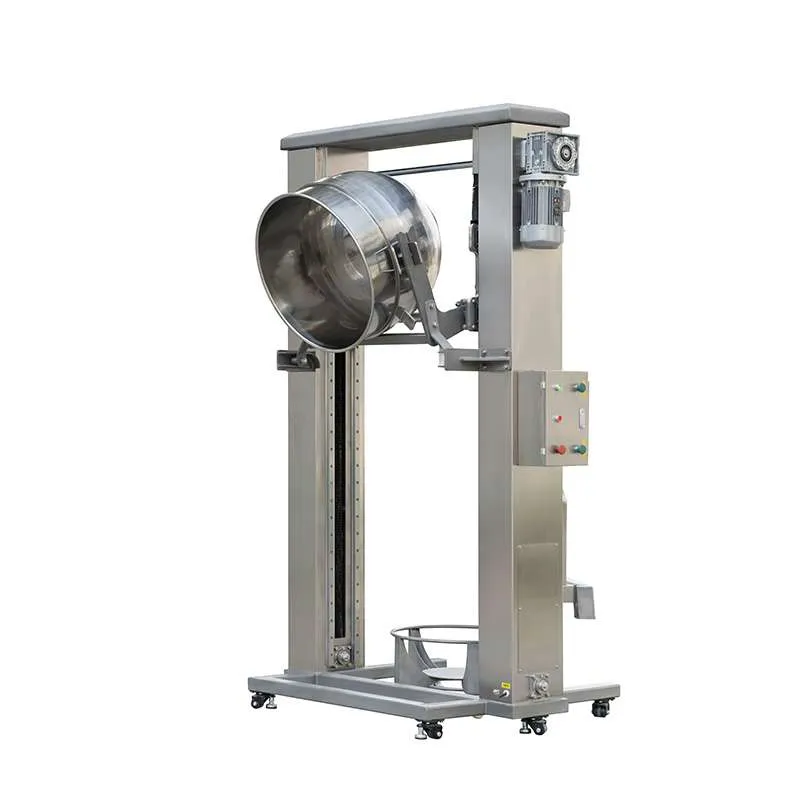
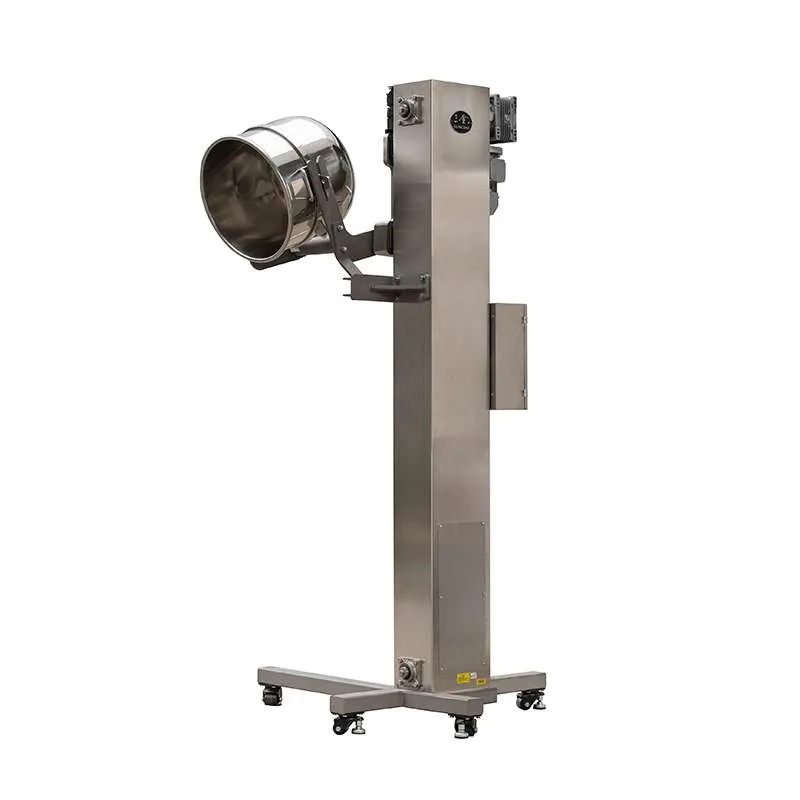
This is where integrated handling equipment can improve process stability. For example, the Bucket Tilting Machine For Dough Spiral Mixer is designed for food industry applications and supports automatic bucket tilting, easier unloading, and one-click returning. In a busy bakery or food drying preparation area, this can reduce manual transfer variability and improve production rhythm between mixing and the next process step.
Its control system uses a microcomputer with PLC touch-screen operation, and it can independently program and store 20 sets of dough kneading programs. For facilities that run multiple formulations within a single day, this level of recipe memory can help standardize process execution and reduce operator-dependent variation. It is also equipped with an automatic quantitative water supply system, while a manual operating system remains standard for practical shop-floor control.
From a reliability perspective, details such as imported belts, imported bearings for key parts, and imported electrical appliances are relevant because handling equipment must operate in sync with the mixer rather than create new vibration, transfer, or stoppage issues. In high-output lines, even saving 1–2 minutes per unloading cycle can matter over dozens of batches per shift.
Where handling support adds value
- Reduces manual unloading effort for heavy dough masses.
- Helps maintain smoother transfer to forming, dividing, or drying preparation stages.
- Supports recipe repeatability through program storage and water dosing consistency.
- Can improve line coordination in plants operating 2-shift or 3-shift schedules.
For procurement teams, this means mixer durability should be assessed as part of a broader dough handling system. A strong machine paired with poor unloading practice will rarely deliver its full lifecycle value.
Practical Maintenance Routines and Inspection Timing for Stable Production
A practical wear-control strategy should combine daily observation, weekly inspection, and monthly dimensional review. Daily checks can focus on noise, dough movement, visible residue zones, and unloading smoothness. Weekly checks may include fastener tightness, drive condition, and unusual vibration. A monthly review is a better time to compare clearance, profile wear, or repeatable changes in mixing time.
For many food plants, inspection planning works best when linked to production intensity. A mixer running 1 shift per day may follow a lighter schedule than a system operating 16–24 hours. As a general industry practice, visual checks every shift, mechanical review every 1–2 weeks, and more complete assessment every 500–800 operating hours can provide a reasonable starting point.
Maintenance records should capture process symptoms, not only part replacements. If dough development time rises, if current draw trends upward, or if operators repeatedly report poor dough circulation, those notes help identify wear earlier. This kind of record becomes especially useful when a procurement team is evaluating whether to refurbish, replace, or expand equipment.
Below is a simple inspection reference that can be adapted for bakery and food drying facilities.
The most effective plants treat these checks as part of process control rather than emergency repair. That approach is particularly useful in export-oriented or large-scale production, where a single unplanned stop can disrupt scheduling, labor allocation, and delivery commitments.
Common maintenance mistakes
- Waiting for visible metal loss before taking action.
- Treating longer mixing time as a recipe issue only.
- Skipping dimensional comparison after major cleaning or overload events.
- Replacing one worn part without checking linked alignment or bearing condition.
FAQ for Researchers and Buyers Evaluating Spiral Mixer Reliability
How can I tell whether wear is process-related or just recipe variation?
Start by comparing at least 3–5 batches using the same flour source, hydration target, and batch weight. If mixing time, dough temperature rise, or turnover pattern changes while ingredients remain stable, wear becomes a stronger possibility. A recipe issue usually appears with material changes; a wear issue tends to repeat across shifts and operators.
What should buyers inspect during a factory visit or pre-shipment review?
Review the spiral surface condition, weld quality, bowl finish, drive response, and unloading stability. Ask for a loaded test when possible, not only an empty run. A 10–15 minute operational demonstration with dough is much more informative for assessing functional wear behavior and process repeatability.
How often should a high-output plant review mixer wear formally?
In many production settings, a formal review every month or every 500–800 hours is a practical benchmark, with shorter intervals for dense dough or 3-shift operation. Plants running near capacity every day may need closer tracking because wear progresses faster under heavy and repetitive load conditions.
Does wear really affect downstream drying and baking performance?
Yes. Uneven dough development can influence sheeting behavior, piece uniformity, internal moisture distribution, and final texture. In food drying systems, inconsistency introduced at mixing can make later moisture removal less predictable, even if the dryer itself is operating correctly.
Missed mixer spiral wear rarely starts as a major breakdown. It usually begins with small shifts in dough movement, mixing time, temperature rise, sound, and unloading behavior. For information researchers and procurement teams in baking and food drying operations, these early signals are valuable because they support better equipment selection, smarter maintenance planning, and more reliable production outcomes.
With long-term experience in baking equipment manufacturing, Zhengzhou Topleap Food Machinery provides practical support for customers who need dependable machinery, component quality, and process-oriented equipment planning. If you are evaluating mixer reliability, dough handling efficiency, or integrated bakery equipment solutions, contact us now to get a tailored recommendation, discuss application details, and learn more about the right configuration for your production line.
News List
- Spiral dough mixer capacity gaps that affect daily outputMay 09, 2026
- Is a 10kg dough spiral mixer too small for commercial use?May 09, 2026
- Mixer dough spiral issues that often lead to uneven kneadingMay 09, 2026
- What makes a planetary mixer easier to clean after wet mixes?May 09, 2026
- Why 20 liter planetary mixers are popular in test kitchensMay 09, 2026
- Spiral dough mixer energy use vs output: what really mattersMay 09, 2026
Best-Selling Products
 Industrial Commercial mixer cake Dough Mixer planetary mixer for sale
 Hot Selling SKM-60L 80L 100L Stainless Steel Planetary Mixer
 Bakery Equipment 125kg 150kg Kneader Spiral Dough Mixer
 Double Columns Lifting Machine
 7L 600W Electric Mixer Stand Mixer Bread Mixer
 Piston Pump For Planetary Mixer
 Mobile Planetary Mixer With Mobile Platform And Customizable Height
 2024 Kitchen Mixer With One Ball Commercial Appliances Planetary Mixer
Leave Us a Message
Send us a Message
A dedicated person will follow up on your needs one-on-one and provide personalized customized solutions according
to your needs.
Get In Touch
We look forward to hearing from you for in-depth communication on how to fulfill your mixing requirements.
Please give us a message