
What's the Difference Between Stand Mixers and Industrial Food Mixers?
What's the Difference Between Stand Mixers and Industrial Food Mixers?
Introduction: Understanding Mixer Categories
Choosing between stand mixers and industrial food mixers? This guide explores key differences in performance, capacity, and applications for bakeries and food production. Whether you're a home baker considering a planetary mixer or a food manufacturer evaluating heavy-duty food mixing machines, we'll help you select the right equipment for your kneading, blending, and mixing needs.
Core Differences: Stand Mixers vs. Industrial Food Mixers
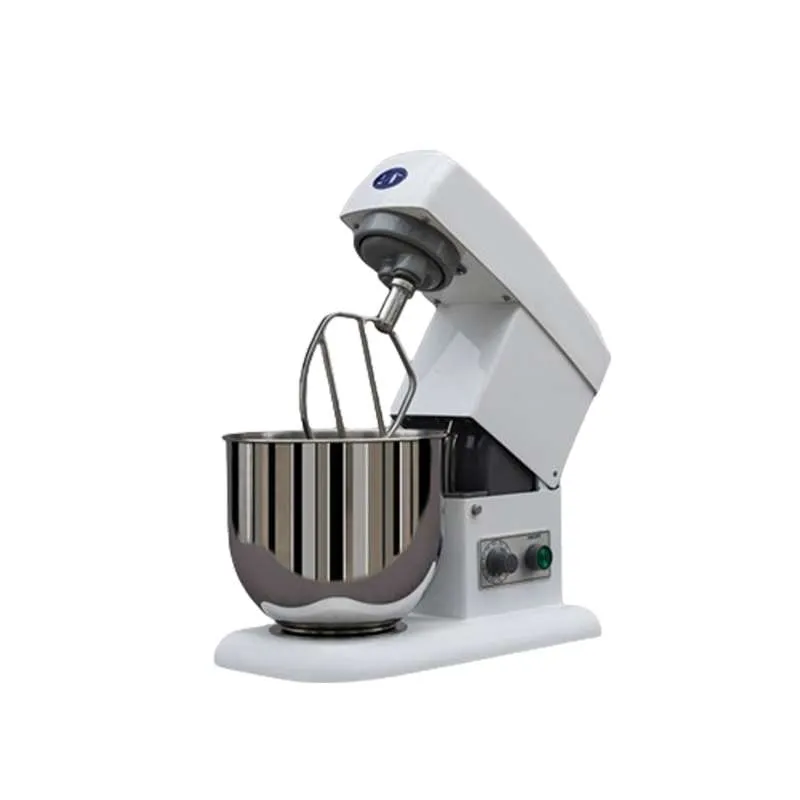
The fundamental distinction lies in their design philosophy and operational capabilities. Stand mixers typically handle 1-10 quarts (1-9 liters) of ingredients with motors ranging from 250-1000 watts, while industrial models like the 6-150kg Commercial Industrial Dough Mixer Spiral Mixers process 6-150kg batches with 0.6kW motors and infinitely variable speed control.
Industrial models feature dual-speed continuously variable technology that adjusts mixing speed based on material characteristics - a critical advantage for commercial bakeries processing 50-200 batches daily. The VFM-6S model's 80-286 rpm range accommodates everything from delicate cake batter to stiff bread dough.
Technical Specifications Breakdown
When evaluating industrial mixers, consider these technical parameters that differentiate them from consumer-grade equipment:
- Voltage: 220V standard for commercial operations vs. 110V for most stand mixers
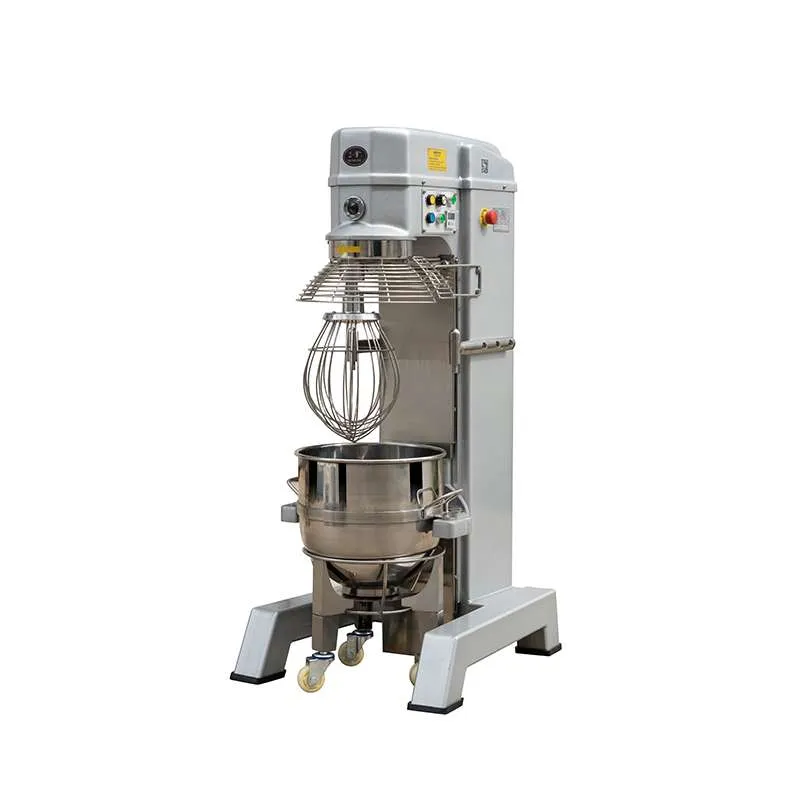
- Mixing Action: Spiral agitators in industrial models vs. planetary motion in stand mixers
- Safety Features: Overload and phase loss protection in SKM-6S models
- Control Systems: Microcomputer/manual dual control with instant switching
The 545*280*550mm footprint of commercial spiral mixers represents a 40-60% space savings compared to equivalent-capacity planetary models, crucial for bakeries with 500-1,000 sq. ft. production areas.
Performance Metrics Comparison
Application Scenarios: Matching Equipment to Needs
Selecting the right mixer depends on your production volume and product types:
When to Choose Stand Mixers
- Home bakeries producing <10kg daily
- Operations requiring frequent recipe changes
- Facilities with 110V power limitations
When Industrial Mixers Excel
- Commercial bakeries with 50-300kg daily output
- Operations requiring high water absorption (68%+)
- Continuous production environments
The TOPLEAP spiral mixer's 41L bowl capacity handles 6kg flour batches - ideal for bakeries producing 200-500 pieces/hour. Its infinitely variable speed (0-26.5rpm slow/80-286rpm fast) ensures optimal gluten development for various dough types.
Purchasing Considerations for Food Professionals
Technical evaluators should assess these critical factors:
- Throughput Requirements: Calculate daily batch needs (6-150kg models cover most commercial needs)
- Power Infrastructure: Verify 220V/380V availability for industrial models
- Material Compatibility: Stainless steel construction for food safety compliance
- Maintenance Costs: Industrial gearboxes typically last 5-7 years with proper care
For operations processing over 100kg daily, the 6-150kg Commercial Industrial Dough Mixer Spiral Mixers offer 30-50% faster mixing cycles compared to planetary alternatives, significantly impacting production efficiency.
Conclusion: Making the Right Investment
While stand mixers suit small-scale operations, industrial models deliver superior performance for commercial bakeries and food manufacturers. The choice ultimately depends on your production volume, product types, and long-term growth plans.
For bakeries producing 50-500kg daily, industrial spiral mixers with variable speed controls like the VFM-6S/SKM-6S models provide the flexibility, efficiency, and durability needed for professional food production. Their 48kg weight and compact dimensions make them suitable for facilities with limited space.
Consult with our baking equipment specialists to analyze your specific requirements and identify the optimal mixing solution for your operation's scale and product mix.
News List
- Spiral dough mixer capacity gaps that affect daily outputMay 09, 2026
- Is a 10kg dough spiral mixer too small for commercial use?May 09, 2026
- Mixer dough spiral issues that often lead to uneven kneadingMay 09, 2026
- What makes a planetary mixer easier to clean after wet mixes?May 09, 2026
- Why 20 liter planetary mixers are popular in test kitchensMay 09, 2026
- Spiral dough mixer energy use vs output: what really mattersMay 09, 2026
Best-Selling Products
 Industrial Commercial mixer cake Dough Mixer planetary mixer for sale
 Hot Selling SKM-60L 80L 100L Stainless Steel Planetary Mixer
 Bakery Equipment 125kg 150kg Kneader Spiral Dough Mixer
 Double Columns Lifting Machine
 7L 600W Electric Mixer Stand Mixer Bread Mixer
 Piston Pump For Planetary Mixer
 Mobile Planetary Mixer With Mobile Platform And Customizable Height
 2024 Kitchen Mixer With One Ball Commercial Appliances Planetary Mixer
Leave Us a Message
Send us a Message
A dedicated person will follow up on your needs one-on-one and provide personalized customized solutions according
to your needs.
Get In Touch
We look forward to hearing from you for in-depth communication on how to fulfill your mixing requirements.
Please give us a message